Best Laptop For Audiophile

The introduction of the MP3 player enabled people to play their music anywhere, but it has had an unfortunate side effect: Folks have sacrificed the awesome audio quality that the compact disc delivered in exchange for ever tinier music players, simpler room-to-room streaming, and the flexibility to buy songs instead of entire albums. So while the convenience of digital media just keeps getting better, the sound quality itself has suffered. It doesn’t have to be that way. You can get sublime audio quality from compressed music files—files that you can store on a central server and listen to in any room in your house, and transfer to an MP3 player for enjoying just about anywhere. I’ll show you how to rip tracks from CD and encode them to FLAC (Free Lossless Audio Codec), which will deliver compressed but bit-by-bit accurate copies of your music (much in the way that zipping a text file with a compression algorithm can reduce the size of the file without losing any of the text).

All you need is a PC with an optical drive, some free software, and your collection of audio CDs. I’ll also discuss several hardware products that can stream music from your PC or network-attached storage (NAS) device to your home stereo system, even though they may be in separate parts of your home.
Mirror Hunting Blinds For SaleAnd as a bonus, I’ll teach you how to calibrate your speakers to your listening environment to achieve the absolute best sound possible.
Washer Dryer Sale Toronto If you buy music online because you’re interested in acquiring specific songs, consider that most online music merchants—including Apple’s iTunes store—don’t offer high-quality music.
Pink Vitamix Blender
They use lossy codecs such as MP3 and AAC with bit rates that max out at 256 kilobits per second. They want you to cram as much music as possible on your PC or portable device with little regard for audio fidelity. When you listen to music encoded this way, you’re not hearing everything that the recording artist created.
Akc Wire Fox Terrier Puppies For Sale Buying and ripping CDs is old-fashioned, but in doing so you enjoy much higher audio quality (and you have a factory-made copy of your music in case your hard drive ever fails). If you can’t bring yourself to buy an entire CD to acquire one track, you can find a handful of online retailers selling music encoded in lossless formats. Music Giants, the biggest fish in this small pond, offers a broad range of pop, classic rock, jazz, and world music encoded in the WMA Lossless format. Linn Records presents a fine collection of classical, jazz, and Celtic music encoded in the FLAC, WMA Lossless, and MP3 formats.
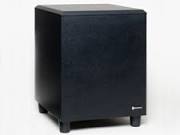
Much of the Music Giants catalog is free from DRM restrictions; none of Linn Records’ offerings is saddled with the annoying technology. The Sonos Digital Music System and Slim Devices’ Squeezebox Classic and Squeezebox Duet are some of the best audio-streaming products on the market. All three enable a do-it-yourselfer to assemble a sophisticated multiroom audio setup for a fraction of the price of a custom-installed system. Plenty of other alternatives are on the market—including Media Center Extenders that can stream both audio and video from a host PC, NAS box, or central server to your entertainment system—but if you’re looking for high-quality audio, these three products deliver tremendous price/performance ratios. These devices can operate on either wireless or wired ethernet networks; the Sonos can create its own proprietary wireless network so that streaming music won’t consume your other Wi-Fi network’s bandwidth. The Sonos music streaming system and the Logitech Silm Devices Squeezebox both support FLAC, but neither supports WMA Lossless.

The Squeezebox does come with PC software that can transcode WMA Lossless files on the fly, but that requires storing your WMA Lossless files on a PC as opposed to a NAS box (since that kind of device can’t run the software). You’ll have to transcode DRM-free WMA Lossless files yourself in order to stream that music on a Sonos system (a tedious process that’s impossible with encrypted files).As someone who is quite an audiophile – who just doesn’t enjoy listening to music, but also plays several instruments – I was surprised when I stumbled upon an article at Max OS X Hints claiming what the “Perfect” EQ settings are. What the article failed to realize is that such settings won’t provide great sound at all, instead they’ll actually reduce the quality, and cause something known as clipping – thus decreasing your total listening experience. Quite frankly, the only reason you think you need such settings is you’re either using subpar headphones, don’t have a high-quality speaker setup, or just plain don’t care.

But seriously – why would you do that to yourself!!? This is what Mac OS X Hints shows as the “perfect” setting:They’ve got to be kidding me.. So you ask, “What really is the best EQ setting?” Well, you have to understand the EQ is a piece of software which increases or decreases a particular frequency – the optimal EQ setting should always be “Flat.” You don’t really want to distort your music, plus you have to remember – when you change the EQ you’re no longer listening to the music as recorded on the master recording. But – if you want to get a little more out of your sound, let me explain to you what all those numbers and sliders on your EQ really mean, and do.. All those numbers and sliders – they correspond to different audio frequencies and wavelenghts (Duuuh! Well, this is what they mean: By the way, I hope you know – you’ll never get that “perfect” sound you want on a lot of speaker and stereo configurations, on your laptop, or even on your desktop – so just stop trying!
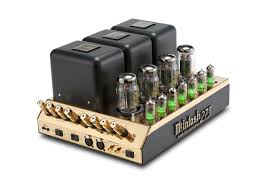
You can only get that “perfect” sound with a high-quality speaker setup (one which has its own dedicated amps for its speakers/tweeters, and the subwoofer), or you can also get that “perfect” sound with a set of premium IEMs. And with these, if you feel like the sound is empty, and/or you don’t like having your EQ set as “Flat” – you can adjust your settings slightly, to be “engineered." So, if you want to perfectly engineer your sound to be just right – I have researched, tested, and tried everything on all sorts of equipment, with all varieties of music. In the end, this turned out to be the true “Perfect” EQ setting: Yes, even with this setting – you will have PLENTY of bass (on most decent IEMs, and all premium IEMs, as well as all high-quality sound systems). But if that configuration just isn’t enough for you, you can try an alternate ”Boosted“ EQ – to boost both the bass and treble while raising the mids slightly, which can be seen below:
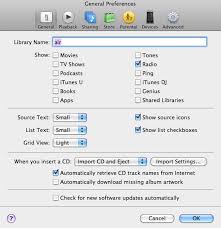
NOTE: If you’re a Mac OS X user, you can add/install the above two EQ’s by downloading the file ”EQs-by-iamziyad.dmg.“ Also, make sure you have Sound Enhancer and Sound Check disabled in iTunes. I have found either one of the two above settings to be optimal while using iTunes with premium IEMs, and also with high-quality audio equipment. However, when it comes to an iPod – I recommend you to keep the EQ on ”Flat“ or ”Off.“ Also, if you’re not using a high-quality sound system, or if you’re using a laptop, those cheap Apple iPod headphones, etc. – I suggest you do the same. You don’t want to have your music clip while listening to it, or worse – risk blowing out your speakers! Ultimately, you can only do so much with software – in the end, it’s the hardware which truly makes the difference! If you really want to hear your music – my kind suggestion to you is to go out and buy yourself a pair of IEMs, if you already don’t own a pair.

But don’t worry – you don’t have a fat wallet to have ”phat“ sound. So now you wonder; ”What are the best IEMs?“ and "How much do an entry-level, and premium pair of IEMs cost?” and, “Which kind is the best for me?”Depending on the quality you’re after, you can get IEMs that drop into various price, and quality ranges which go from entry-level to medium quality at $20 to $75; premium to professional quality at $75 to $200; and high-performance professional quality that runs upwards of $500 to $1500. So let me break it down for you.. A decent pair of IEMs,which would be the equivalent of owning a ‘Honda’, a 'Toyota’, or a 'Nissan’ – are available rather affordably, costing anywhere between $20 to $75 (such as the Denon AH-C252K, Klipsch S2, Klipsch S4, Sony MDR-EX 81LP, and the Maximo iMetal iM590). Entry-level to medium IEMs usually deliver audio quality that would be described as “sounding good” to the untrained ear, and are relatively comfortable – but most of them don’t have the same build quality as their more expensive counterparts, thus usually not lasting as long.

To be straight-forward and honest – if you really want the most for your money, and the best out of your music then I recommend going for a pair of premium IEMs which will run you anywhere between $75 and $200. Such IEMs would be like owning a luxury, and performance model of a 'BMW’, 'Mercedes’, or a 'Bentley’ in the world of cars. One of the best parts about premium IEMs is you get amazing clarity, that perfect bass you’re always after, clear mids, and a tuned treble. Another absolutely wonderful part about them is you can also listen to your music at relatively low volumes and still hear everything – as almost all premium IEMs offer excellent noise isolation technology. Aside from that most companies, usually provide a no-questions-asked extended warranty (as a commitment to stand beside the build quality of their product). In the $75 to $200 range we have only some of the best. In this class, you can get some amazing quality premium IEMs (such as the V-Moda Remix Remote, Tour Beats by Dre, Denon AH-C700, Atrio M5, Shure E3c, and the Etymotics’ ER-6i).

Premium to professional IEMs provide excellent audio quality with full bass and treble coverage, without “muddying” the mids, all while still being the most comfortable. Although, if you’re feeling really brave and want to go all out and splurge ($500 to $1500) – you can get a pair of what many audiophiles, and music artists would consider to be the 'Bugatti Veyron’ or the 'McLaren F1’ of IEMS which can have as many as 6 speakers per ear, and fit your ears precisely – as they’re custom-made and molded from your own ears (available from Ultimate Ears and Livewire). I bet you’re saying, “Ooh, woooow!” right now – that’s what I said the first time I saw them too! I know, those custom-made IEMs are just ridiculously expensive! You honestly don’t need anything like that unless you’re going to be standing on stage in front of 250,000 screaming and roaring fans – so just forgetta 'bout it! Just trust me, with a properly configured EQ and a good pair of IEMs..