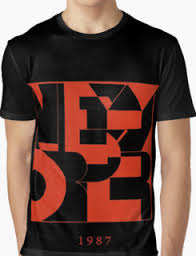
New Order T Shirt Power Corruption Lies

for joining the Redbubble mailing list Thanks for signing up! Receive exclusive deals and awesome artist news and content right to your inbox. Free for your convenience.Factory Records / New Order Power, Corruption & Lies T-shirt (White) Peter Saville's iconic Factory Records logo combined with his sleeve design for New Order's 'Power, Corruption & Lies' album. You may also likeWhen you're asked what your favourite album is, do you pick something impressive to show how smart you are? Or perhaps you plump for a record full of poetry, that says lots about your deeply interesting personality. I always go for a record I reach for whatever the mood or weather, full of naive, off-key vocals, keyboards riffs that wear their influences heavily, whose best song culminates in the lyric: "I caught you at a bad time/ So why don't you piss off?" Power, Corruption & Lies was released in May 1983. To the casual observer, three musicians who made it – now joined by Gillian Gilbert on keyboards – were still under the shadow of what happened three years before.
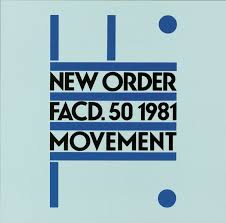
The basket of roses on its cover, taken from a painting by sleeve designer Peter Saville, also looks commemorative; a late wreath for Ian Curtis, perhaps. But after their 1981 debut album, Movement, two singles had helped Bernard Sumner, Peter Hook and Stephen Morris break away from Joy Division: 1982's breezily beautiful Temptation, later to have a second life on the Trainspotting soundtrack, and a 12in single based on the bassline from Sylvester's You Make Me Feel (Mighty Real), the rhythms of Klein and MBO's club classic, Dirty Talk, and a sample of synthesised voices from Kraftwerk's Uranium. Released in March that year, Blue Monday was not included on the album that came out two months later. This, in many ways, makes me love it even more. After all, this album reveals a band finding their feet, finding their sound, moving on – a process that intimately involves the listener. The group do this naively, awkwardly, playfully – qualities that lie at the heart of this album's charm.

Age of Consent opens with one of Hook's most joyful basslines, and Sumner asking someone or something to "please let me go"; it's hard not to think of the past when you notice this. The Village is similarly, blissfully innocent, introducing a moment when a "new life turns towards you", before bubbling over with simple, major chords. Also, there are few lyrics as genuinely lovely as: "Our love is like the flowers/ The rain, the sea and the hours."
Prom Dresses At Camille The ghost of Ian Curtis lingers, nevertheless.
Chow Chow Puppies For Sale GermanyWe All Stand and Ultraviolence could be offcuts from Closer, their titles suggesting the work of JG Ballard and Anthony Burgess.
Pets For Sale In Chester County Pa
In both, you can hear Sumner struggle – often painfully – under the shadow of the man who came before him. But hearing this transition is moving and fascinating. "Time to go, time to go," he concludes, at the end of the latter, as programmed beats bursts through the stormclouds. 586 is even more revealing. What starts as an instrumental that could easily fit on Joy Division's 1978 debut, Unknown Pleasures, suddenly fades at 1.45;
New Order T Shirt Power Corruption Liesthe tight, sharp electro that follows is utterly thrilling, like new life coming into being.
Single Family Homes For Sale Medford Ma And then, like a rainbow from heaven, comes Your Silent Face, its first shimmers reminiscent of Kraftwerk's Europe Endless.
Jovani White Strapless Prom Dress
A synthesiser melody follows, wide-eyed with wonderment, then a melancholy melodica, sighing in the breeze. Even though the lyrics are far from Pulitzer prize-winning – Sumner's cursing sounds sweet, as well as silly, by today's standards – there are few songs that sound so utterly transcendent, and few moments in music that carry so much emotion. Here is "no hearing or breathing, no movements, no colours, just silence"; here is peace among men; here is a new, bold beginning. • You can write your own review of Power Corruption & Lies on our brand new album pages: once you're signed into the Guardian website, visit the album's dedicated page. Or you could simply star rate it, or add it to one of your album lists. There are more than 3m new pages for you to explore as well as 600,000-plus artists' pages – so if, for example, Joy Divison are more your thing, or Kraftwerk, or Northside, say, then head there, find that act's albums and get to work ...Power, Corruption, LiesWhen: Spring/summer 2013
The second time Supreme used Peter Saville's artwork resulted in the "Power, Corruption, Lies" collection, taken from New Order's 1980 album of the same name. The collection featured a floral-print T-shirt, sweatshirt, bucket hats, and another collection with Vans. This time, Supreme was able to throw in a deeper meaning to the boombing floral trend, while putting the youth onto albums that they might have never heard.SIGN UP FOR OUR NEWSLETTEREnterMovementRhinoAmoeba MusicTen years in 10 discs: this-- surely definitive-- edition of the New Order story starts with a shattered band groping to replace the irreplaceable and ends with a group surfing to no. 1 on the UK charts. In between is some of the most casually amazing pop music ever made, but these two bookends-- "Dreams Never End" and "World in Motion"-- tell you more about the group than you'd think. The interesting thing about "Dreams Never End" is that Peter Hook sings on it, and he does as well as Barney Sumner would have. Following the suicide of Ian Curtis and subsequent retirement of the Joy Division moniker, New Order began as a band without a frontman;

the trick of them is that they stayed that way, even after Sumner had become the regular vocalist. Sumner's often flat, affectless voice might be a familiar point of contact with New Order but it's rarely their focus. Their notoriously careless lyrics-- Sumner has generally made great play of how last-minute they are-- are a further sign of the group's discomfort with the way rock music tends to be lensed through its singer. So it's no surprise the 12" format was so attractive for New Order-- more lovely space for the vocals to wander out of entirely. So if Sumner isn't a frontman, what is he? "World in Motion" suggests an answer. It's a song that uses soccer as a metaphor for raving and resistance-- "Beat the man! -- so why not use the sport as a metaphor for what the band who made it do? In those terms, Sumner isn't a frontman, he's a target man: The striker whose job isn't just to score, it's to hold the ball so his teammates can move forward and into play. New Order's secret is their fluidity, their easy sharing of the spotlight.

At any time in any song, any one of them might provide the hook-- the bright drama of Gillian Gilbert's keyboards, the giddy sequencing of Stephen Morris' percussion, Peter Hook's famously liquid basslines, or indeed Sumner's own guitar lines, as gorgeously full and melodic as his vocals are blank. This interplay defined New Order from the beginning-- on Movement's centerpiece "The Him", your focus flickers from the tribal drumwork to the blocky thrash of Sumner's guitar to the stern jab of the bass: it's almost never on the words. But New Order really woke up to their own potential when they bought a nightclub and started making music that might fill it, and for this side of the story you need the second discs of these generous releases, filled with singles and 12" remixes. The deluxe reissue package can feel like the industry's last throw of the back catalogue dice-- hoover up all sorts of bits and bobs and use historical context as a figleaf to persuade people to buy the same record a third or fourth time.

But not this time. If New Order had never released singles, how would we remember them now? Perhaps authors of a solid body of pop work, dependable fixtures of the alternative scene whose success nobody could begrudge. These albums are often excellent, but of these five packages, the "bonus disc" beats the first at least three times. The rhythmic experiments on Movement, for instance, make more sense when you hear them alongside the mechanoid funk of "Everything's Gone Green" and the sudden break into joy of "Temptation". The second disc here takes the bleak pressure off the original album, letting it breathe not as an awkward afterthought to Joy Division but as a group pushing that band's musical ideas further. Their most coherent and underappreciated record, it's still an uncomfortable listen, with tracks like "Senses" savage in a way they never were again. Power, Corruption and Lies exists in the shadow of two remarkable singles: "Temptation" and "Blue Monday". The first had established the band's emotional signature: a bittersweet rush of hard-won, inarticulate bliss.

Many of their most glorious tracks-- "Bizarre Love Triangle", "Run", "Your Silent Face", "Thieves Like Us"-- feel like returns to the well "Temptation" dug, which makes it even more perverse that the 1987 re-recording of that track is an absentee here: The original's greatness is rougher-edged. "Blue Monday", meanwhile, took the icy landscape of Movement-- and hence its loyalist audience-- fully onto the dancefloor. Power, Corruption and Lies works to reconcile these seminal records: It's a spiky take on synth-pop, with some of the group's giddiest music. The uninhibited tumbles of "Age of Consent" and "The Village" suggested a band drunk on possibility; "Your Silent Face" married rhythm and grandeur and anger. A generally sympathetic re-mastering job can't disguise how clattery and sharp Low-Life sounds: Hailed at the time as New Order's first really great album, it's now the one that seems most time-bound thanks to its brash mid-80s keyboard sounds. There's plenty of drama here, but the album's two stand-out tracks are best heard in their bonus-disc extended versions.
At full 18-minute stretch, "Elegia" more than earns its pomposity, while the long mix of "The Perfect Kiss" has some claim to be the decade's greatest 12" edit: A riot of interlocking bass and keyboard hooks, breathless handclap drums, and five or six different climaxes. The bonus disc of Brotherhood has two more peerless 12" mixes-- Shep Pettibone's extensions of "Bizarre Love Triangle" and "True Faith"-- but the album itself is New Order at their most wickedly ramshackle, turning away from the brash electropop of Low-Life and covering most tracks with the messy jangle of Sumner's guitar. They sound, for the first time since Movement, like an indie band-- but a superb one: Four musicians at ease with each other and themselves, combining on tracks like "Way of Life" to provide a feast of hooks that leaves the listener breathless and delighted. Elsewhere, "1963" and "True Faith" suggested they had the songs to be chart fixtures on relatively conventional terms; "Touched By the Hand of God" and the pointless "Blue Monday '88" hinted they might be running out of steam.

Instead they made arguably their best record. Past the red herring of "Fine Time"-- a dance music band "going dance," and one of those rare gags that stays entertaining-- Technique takes the easy interplay and full-band sound of Brotherhood and drenches it in good Ibiza vibes. Each track, as it leads you into a fluid maze of melody, is a hug from a stranger you've known all your life. "Nothing in this world can touch the music that I heard as I woke up this morning," sang an awed-sounding Sumner, catching the album's mood perfectly. Technique is magnificent, but it has the weakest bonus disc of all-- listless B-sides and instrumentals, and merely functional remixes. Standard-bearers for club culture in the alternative world for most of the decade, New Order never really adapted to dance music's victory in the UK mainstream: They made more great records, but no more great 12"s. With their sound perfected, they also stopped surprising us: So even though this isn't all the records they made, these collectors' editions still feel like a complete story of this most accidental of bands.