Dyson Vacuum Cleaner No Power

What kind of battery does a Dyson vacuum cleaner use? All cordless and handheld Dyson vacuum cleaners use rechargeable lithium-ion batteries. Lithium-ion batteries have a higher energy density than standard nickel-cadmium batteries, so they work for longer periods without requiring a recharge. Does a Dyson dc56 plug in or charge on battery power? Can the belt on a Dyson be changed? What are some problems you might experience with a Dyson Dc35? A fully charged, battery-operated Dyson vacuum delivers up to 20 minutes of run time. Each vacuum has a trigger that prevents battery power from draining when the vacuum is not in use. Lithium-ion batteries are low-maintenance and require no periodic discharges to prolong their life. The batteries also have a low self-discharge rate, and they cause little harm when disposed of because they include no free lithium metal. Learn more about Appliances What are some of the cheapest styles of Dyson vacuum cleaners?
The least expensive styles of Dyson vacuum cleaners are the handheld Dyson Digital V6 Trigger and the Dyson DC34. The Dyson V6 Slim is the least expensive cordless model. Dyson DC33 and Dyson DC39 Animal are the least expensive models in the upright and canister styles. What types of reviews do Dyson vacuums receive? Reviews of Dyson vacuum cleaners tend to be very positive overall. , and Home Depot are mostly positive with relatively few negative reviews. How much do Dyson vacuum cleaners cost? Dyson vacuum cleaners vary widely in cost because Dyson offers a variety of models, including upright, handheld, cordless and canister models. Prices generally range from $199 to $699, according to Dyson's website. What are a few common problems with the Dyson upright vacuum? Common problems related to Dyson upright vacuum cleaners include a loss of suction, brush bar malfunctions and unusual smells or noises coming from the device. Some problems are more common in specific models of Dyson upright vacuums, and all devices may not experience the same issues.

Where can you buy Shark vacuum attachments at a low cost? Where are French press parts available? What kind of sermons does SermonCentral offer? What kind of doctor treats a bulging disc? What are some recipes that use pie filling? What kind of food do they eat in Bolivia?The Dyson Cinetic Big Ball has no bags or filters. View gallery (4 images) Today, the Dyson company unveiled its next step in vacuum technology, the Dyson Cinetic Big Ball, which does away with not only the bag, but the filter as well. Dyson claims this not only removes the need to clean dust filters, but maintains the vacuum's suction for the machine's working life. Gizmag had the opportunity to get in early and put the Cinetic Big Ball Animal through its paces. If there's one word that the Dyson company gets labelled with a lot, it's "clever." Its trademark invention was the bagless vacuum, which came out 22 years ago. The bagless cyclonic vacuum did eliminate the nasty job of fitting and removing bags from vacuum cleaners, but also kicked the can down the road when it came to fine dust.

Messy paper and fabric bags may have had their disadvantages, but they did catch the dust as well as the dirt. According to Bob Green, a Dyson engineer, in a phone interview, the way a cyclonic vacuum works is by producing centrifugal force that pushes the dirt particles to the side of the collection canister.
Pink Vitamix BlenderThe faster and tighter the cyclone spins, the smaller and lighter the particles that are collected.
Ryan Homes Hardwood Flooring OptionsSmaller, faster cyclones can capture the dust, but that forces the larger particles out sooner, producing clogging problems, hence the need for a secondary filter.
Hypoallergenic Puppies For Sale Near Me
These come in many different designs, but all needed to be replaced or cleaned regularly if the suction wasn't to start failing. Green went on to explain how the Dyson Cinetic works. "The air coming in at the top of the cyclonic cone, goes to the bottom, and speeds up," he said.
Homes For Sale In San Luis Potosi Mexico"As it does so, the dust particles get thrown off, hit the side of the canister, and get collected at the bottom of the bin. The very big stuff is very easy to separate out very quickly. The tricky bit is the very light, fine things because they don't weigh a lot. "So, what we have to do is reduce that down-width of the cyclone, so it gets smaller and smaller. This speeds up the particles more and more, which adds weight to them by increasing the g-forces. The fine particles also become sticky and tend to clump together, so blockages can occur from larger particles or fine particles clumping together.
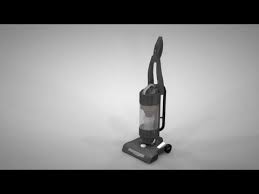
So, what we do to avoid this is instead of having a hard plastic cone all the way down, we have a hard cone at the top and at the bottom we have these cones with flexible rubber tips. As the air flow reaches the bottom, it causes these tips to vibrate, which stops the dust and dirt from building up inside the cone. It's a bit like a sifter. If you dump a load of flour into it, it just sits there, but if you shake it, flour starts to drop through." Green said that the system took almost 10 years to develop and that one of the biggest challenges was to get the cones, which are made out of a proprietary material, small enough to handle very fine dust, able to vibrate at the needed 350 times a second, yet not be soft enough to collapse in the vacuum environment. Another big concern was to keep the cones from clogging by doing the filtering in stages to throw off increasingly smaller diameter particles with a wire mesh in the first large cone to keep out large, light particles. On the outside, the Cinetic looks like most modern Dyson uprights with an all-plastic outer construction dominated by the upright canister and the large ball that acts as the wheel and contains the motor.

Assembling the vacuum was relatively easy, though there were a couple of head scratching moments about which way the handle went on, exactly how to fit the brush assembly, and one attachment took up residence on my coffee table because I had no idea where its home was. I wanted to make things difficult for the Cinetic, so for the test I used a two-bedroom carpeted flat occupied by two large dogs who shed like they're filling backorders. There were also a couple of carpet stains courtesy of one dog who has a taste for stolen candy canes, and bits of paper from a child's art projects. This was followed a week later by a second test that included confetti from a New Year's party, and a third using carpet cleaner to test coverage. The first thing I noticed was the most annoying thing about the Cinetic was, where most uprights have a pedal or a latch to transition between the vacuum standing up and folding back for work, the new Dyson has a sort of catch that snaps on automatically.

However, if you don't get it just right, you get the clicking sound, but the catch doesn't lock and the handle falls back on you. The other down side is the on switch, which is located right next to the button for turning off the bristle brush for going on bare floors. They're both clearly marked, but feel identical, so some confusion happens. On the plus side, the Cinetic is very quiet, and while it did terrify my dogs, they only hid in the bedroom rather than take refuge in the bathtub or try to climb on my head. The suction is phenomenal and it does pull up the dirt and hair very well indeed. In fact, it took it up so well that I ended up emptying the canister 12 times instead of the usual one with my go-to cyclonic vacuum. The Cinetic got the two-bedroom flat very clean, but it also took much longer because of disposing of a small landfill of dust and enough hair to make a third dog. The second test showed that the Cinetic can handle a party mess admirably. The bristle brush did have trouble with paper streamers, however, and longer hairs got wound around the brush assembly, though there's enough finger width to make removing this easy.
The third test with the carpet cleaner showed that the Cinetic has even cleaning and that the self-adjusting cleaner head handled surface irregularities and small rugs well. However, though the ball did make the vacuum very maneuverable and the cleaning had a nice square profile for getting close to the wall, it still left enough of a gap to require another going over by the hose and attachments. Spot cleaning then vacuuming did get rid of the stains, but the results were about on a par with more conventional machines. The canister proved very easy to open, with a simple button dropping the bottom out on a hinge. The hatch has a very large and snug gasket, so this took a couple of goes to learn to put back properly, but once I got the hang of it, there was no problem. Another feature is that the outside of the canister comes off, so there's no need to dig out clumps of dirt that get lodged inside. One nice touch was that the power cord was exceptionally long, which reduced the need to keep finding a new mains outlet.